
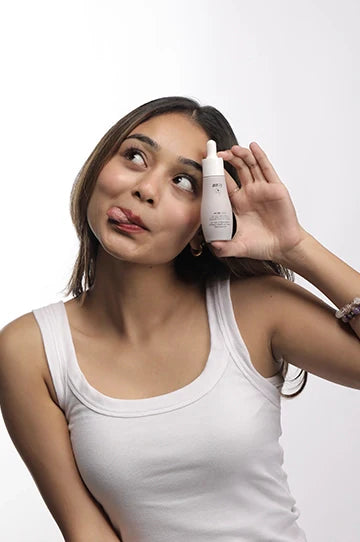
Hormonal acne made simple—what causes chin/jawline breakouts and safe treatment steps for adult women, PMS and PCOS. Practical care that actually helps.

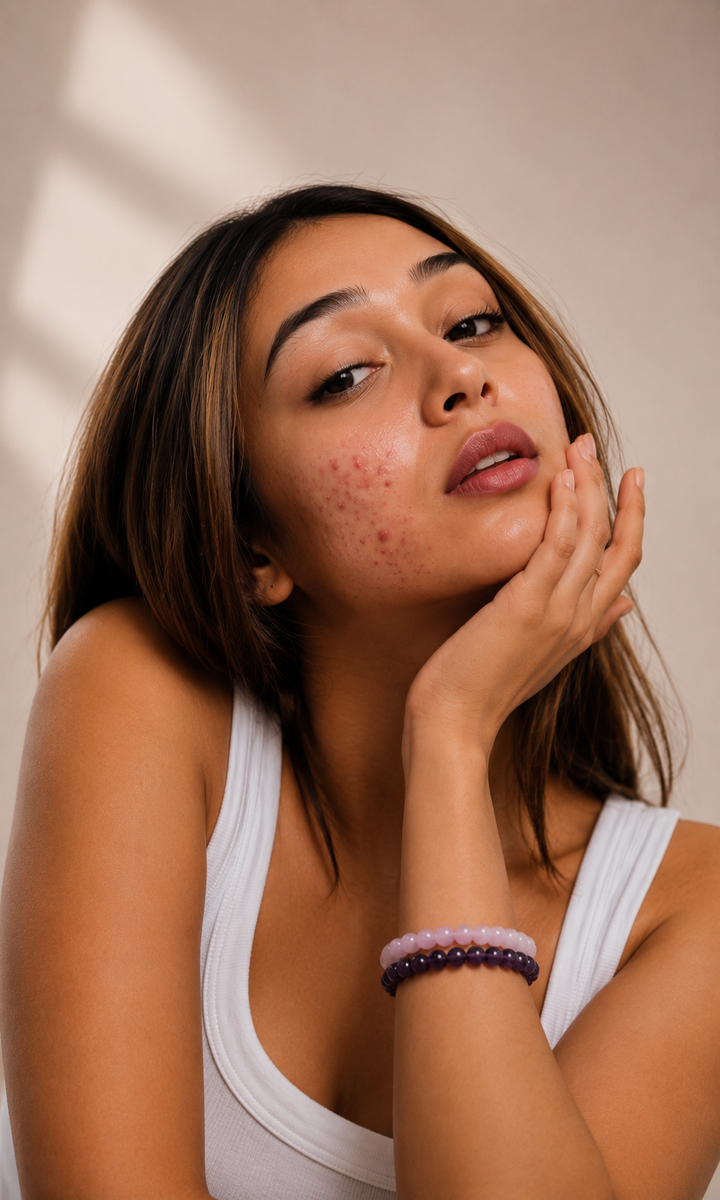
Hormonal acne often shows up on the chin and jawline. If your pimples flare before periods or with PCOS, you’re not alone. This guide explains why hormonal acne happens, how to identify it, and simple steps for safe hormonal acne care. It also covers period-related breakouts, adult female acne after 25, and what “testosterone imbalance skin” means in plain words.
Medical disclaimer: This content is for education only and is not a substitute for professional medical advice. Please consult a qualified healthcare provider for personal care.

Hormonal acne is driven by shifts in hormones like androgens. These shifts increase oil, clog pores, and inflame skin—especially on the lower face. Many women notice breakouts 7–10 days before periods or during PCOS-related cycles.
Step 1: Androgen signals rise.
Step 2: More oil mixes with sticky dead cells, clogging pores.
Step 3: Bacteria grow and inflammation forms painful bumps.
In the late luteal phase (just before periods), estrogen and progesterone shift. Oil becomes thicker and skin gets inflamed, causing chin breakouts just before day 1.
PCOS may elevate androgens or make the skin more sensitive to them. Care must stay steady—regular sleep, mindful eating, movement, and consistent skin hygiene.
Tip: Keep actives mild and consistent. Avoid sudden strong peels.
Women naturally produce androgens. Even normal levels can trigger extra oil if the skin is sensitive. PCOS can increase this effect. A doctor can evaluate with a clinical history and tests.

Avoid popping. It pushes oil and bacteria deeper and increases scarring. Use warm compresses and a proven spot treatment instead.
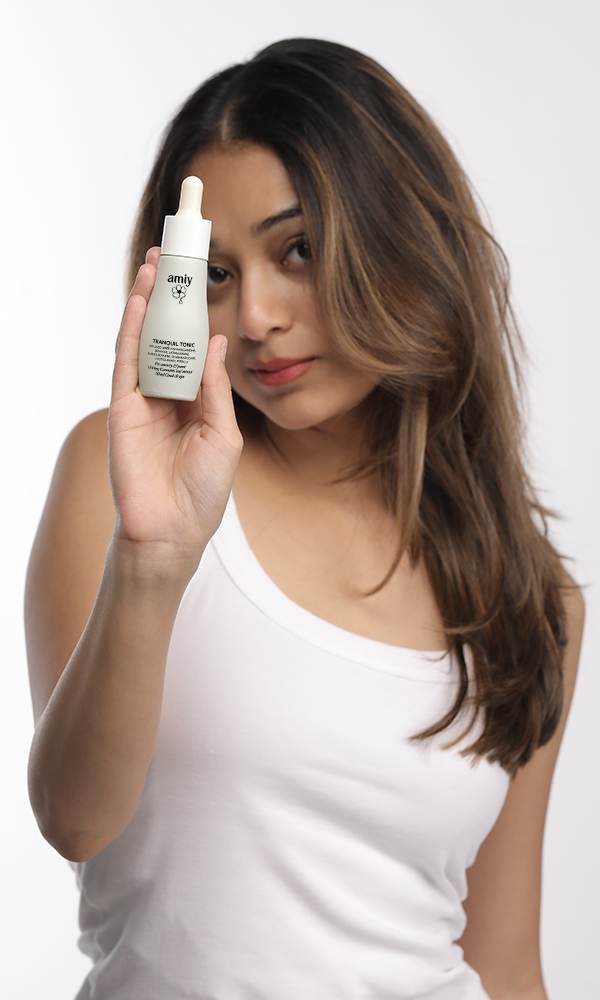
Amiy’s approach focuses on calming the skin–nerve conversation (Bio-Neuromodulation™) and using synergistic botanicals (Complex Plant Elixir™) that help reduce redness and support balanced skin. These support routines, not replace treatment.
Cleanser check: If skin feels tight, switch to a mild gel.
Active nights: Keep to 3–4 nights; alternate salicylic acid, AHA, and niacinamide.
Period week: Add a clay mask and keep the routine extra gentle.
PCOS clues: If cycles are irregular with chin cysts, track symptoms and consult a specialist.
Stress loop: If sleep is poor, add a wind-down routine with breathwork, stretching, or a warm shower.
Bridal skincare for sensitive skin: calm, glow, protect - Amiy Naturals
Secret to Glowing Skin: Gut Health, Diet & Wedding-Ready Tips | Amiy Naturals
Is hormonal acne only a teenage problem?
No. It is common in adult women, especially around the chin and jawline.
What helps period acne fast without irritation?
Gentle cleansing, light moisturiser, a proven spot gel, and a clay mask once that week.
How long does hormonal acne care take to show results?
Usually 6–8 weeks of consistent routine.
Does diet affect chin acne?
Yes. Whole foods and hydration support better oil balance and reduced inflammation.
Are natural formulas enough for cystic acne?
They can support skin but deep cysts usually need dermatologist care.
Can poor sleep worsen acne?
Yes. Stress and short sleep can trigger oil and inflammation.
If your breakouts cluster on the chin and jawline, a calm and consistent routine helps. Amiy Acne SOS supports clearer-looking skin with synergistic botanicals and a gentle, daily-use formula.
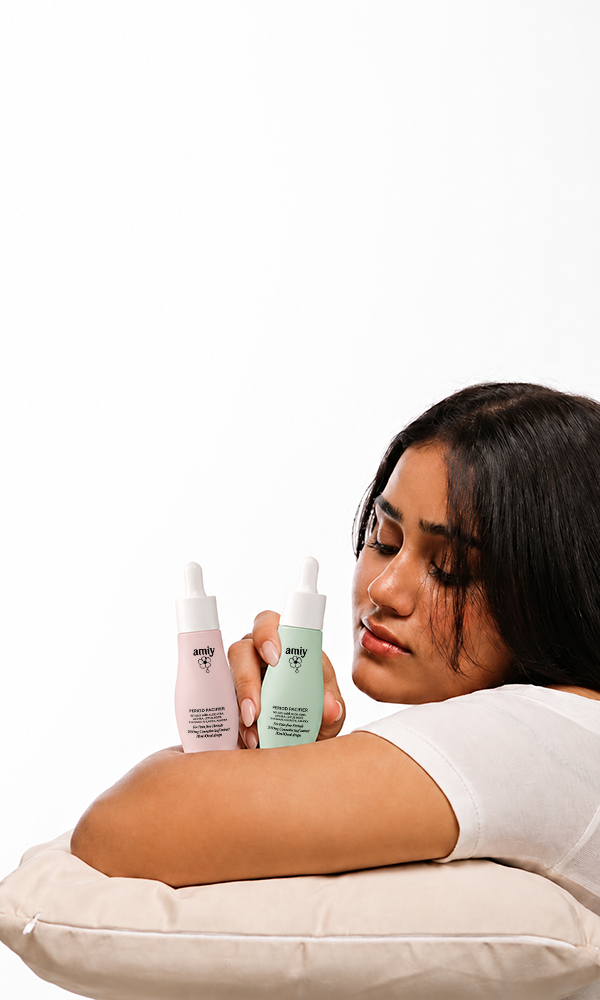
If your flares peak around periods or with PCOS, a cycle-friendly routine may help. Period Pacifier supports PMS comfort, while Gut Reset supports digestion and the gut–skin connection. These work best alongside healthy habits.