




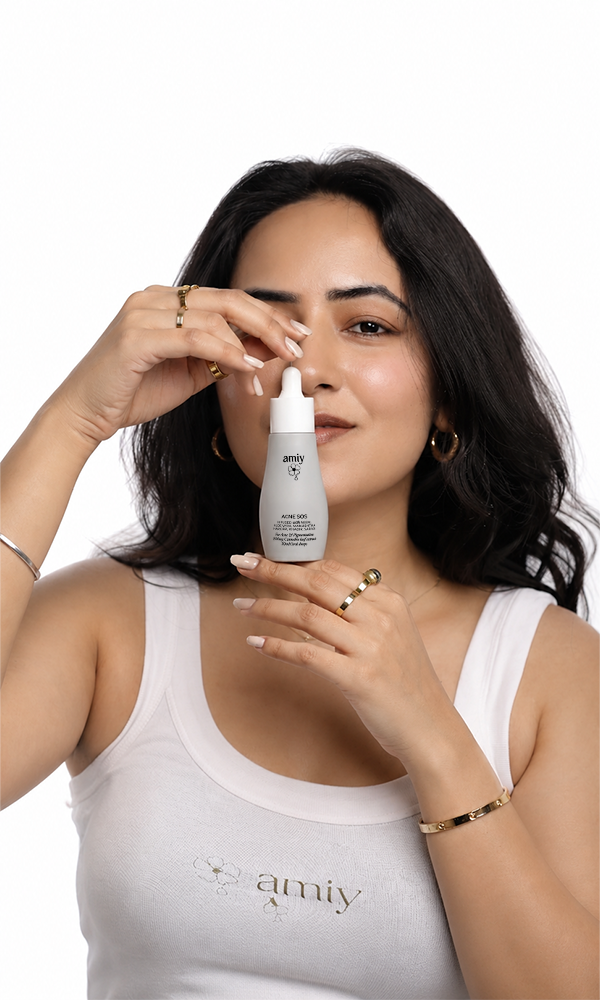

The comparison Oral acne drops vs. topical treatments matters because people want the clearest path to better skin. Some want something they can take from within. Others trust the outside approach more because it feels direct. Many people end up using both. There is no universal winner. Topical treatments target the skin surface. Oral acne drops or internal solutions aim at deeper patterns such as hormones, digestion, inflammation, or stress. If the acne is mostly surface blockage, topical care may be enough. If the breakouts keep coming from inside signals, an internal approach may matter more. The real question is not which one sounds better. It is which one matches the acne pattern better.
What oral acne drops do
They work from inside
Internal acne drops are meant to target deeper triggers. They are not spot treatments. Their purpose is to influence the body pattern that may be feeding acne from within.
That is why people compare oral acne drops vs. topical treatments so often. One acts on the skin surface, while the other aims at internal factors like hormones, stress, and digestion.
They may suit recurring patterns
If acne keeps returning with menstrual cycles, stress spikes, or digestive trouble, oral care may help more. A person may notice that the skin flares in the same pattern every month or during certain life periods.
In those cases, acne drops from within may feel more relevant than another surface product. They may fit a pattern that keeps repeating even when the skin is cleaned well.
They are not surface spot treatments
Oral drops are not meant to dry out a pimple or remove oil from the skin directly. They work differently from creams and gels.
That is why the acne from inside out idea matters. If the issue is being driven by internal signals, a topical-only approach may leave part of the pattern untouched.
Which one works better? It depends on the trigger If clogged pores are the main issue, topical care may be enough. If the acne is hormone-linked or stress-linked, oral care may matter more. If digestion seems to rise and fall with the skin, an internal approach may be worth considering. This is why Oral acne drops vs. topical treatments is really a trigger question, not just a product question. It depends on the skin type Sensitive skin may not tolerate strong topicals well. Some people get dryness, peeling, or redness with surface products and start looking for a gentler route. For those readers, internal care can sound more appealing because it avoids repeated irritation on the skin barrier. That said, oral products can also have limits, so the choice still needs balance. It depends on how long the acne has lasted Long-term recurring acne often needs a broader plan. A person who has tried several topical products with only short-term relief may need to ask whether the deeper pattern has been missed. That is where the comparison between oral acne treatment comparison and topical acne products becomes useful. The better option is usually the one that fits the acne story, not the one that sounds strongest.
Can they work together? Yes, often they can Many acne plans use both internal and topical care. That is common because acne often has more than one driver. One part of the plan may work on the surface while another part works from within. This combined route can be especially helpful when acne is stubborn but not severe enough to need a strong prescription-only path. It may also help when one method alone only partly improves the skin. This may cover both sides of the problem One works on the skin. The other works from within. That pairing can make sense when breakouts are both clogged-pore based and hormone or stress related. For example, topical treatment may help clear active spots while oral acne drops support the internal pattern that keeps the acne returning. The result may be slower, but it can feel more complete. It can be useful for mixed acne patterns Some acne is partly surface-based and partly internal. The forehead may be oily and clogged, while the jawline flares with the cycle. In that case, the treatment approach may need to reflect both patterns. A combined plan can be especially useful when someone wants to avoid jumping straight to very strong oral medication but still wants more than a cleanser alone. How to choose between them Choose topical first if Your acne is mild and mostly surface-based. If the breakouts are few, limited, and mostly clogged-pore driven, topicals may be enough to start with. Consider oral support if Your acne follows stress, cycle changes, or gut symptoms. If the skin seems tied to the body’s internal rhythm, oral acne drops may deserve a closer look. Consider both if Your acne keeps coming back despite one method. That pattern often means the issue is broader than one product can solve on its own. The best answer to Oral acne drops vs. topical treatments is often not one or the other. It is knowing when each one fits.
Oral acne drops vs. topical treatments is really a question about where the acne starts. Surface-based acne may respond well to topical care. Acne tied to hormones, stress, or digestion may need something internal as well. The better answer is usually the one that matches the pattern, the trigger, and the person’s tolerance for time and side effects. Many people do best with a plan that uses both methods together rather than treating the face as if it were separate from the rest of the body.


