ENJOY 1 COMPLIMENTARY GIFT

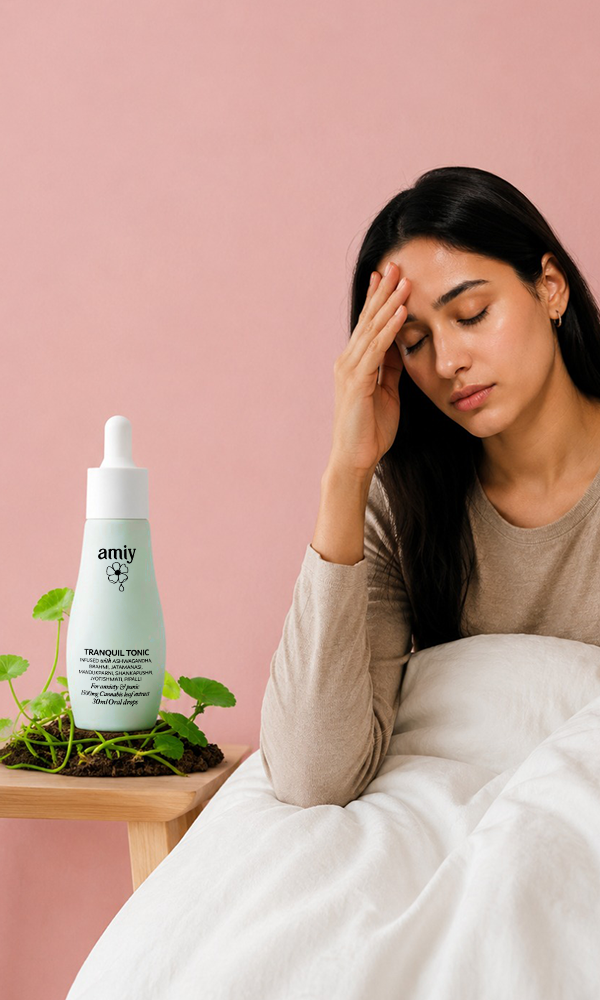

Sleep is often viewed as a passive state where the body simply “switches off.” In reality, sleep is one of the body’s most active biological repair processes. During healthy sleep, the nervous system recalibrates, inflammatory pathways are regulated, hormones are balanced, tissues are repaired, and the brain clears metabolic waste. When sleep becomes chronically disrupted, however, the consequences extend far beyond fatigue. Modern integrative medicine now recognizes a powerful relationship between: - · Sleep dysfunction - · Chronic stress - · Systemic inflammation - · Anxiety disorders - · Hormonal imbalance - · Immune dysregulation - · Chronic pain syndromes This relationship is often described as a self-perpetuating cycle - the sleep-stress-inflammation triangle. Poor sleep increases stress hormones and inflammatory cytokines. Elevated stress and inflammation then impair sleep quality further, creating a vicious physiological loop that affects nearly every system in the body. For many patients, symptoms such as: - · Anxiety - · Brain fog - · Fatigue - · Muscle tension - · Digestive issues - · Mood instability - · Hormonal disruption - · Chronic pain may originate from unresolved sleep dysfunction rather than isolated disease processes. In Ayurveda and integrative botanical medicine, sleep disturbance is not considered merely a nighttime problem. It is viewed as a systemic imbalance involving the nervous system, adrenal response, digestion, circadian rhythms, and inflammatory burden. This article explores the sleep stress inflammation connection through an integrative clinical lens and explains how Ayurveda medicine oral drops and botanical interventions may support nervous system recovery, sleep restoration, and inflammation reduction.
Poor Sleep Cortisol Levels and Stress Exhaustion
· Evening cortisol often remains elevated
· Sympathetic nervous system activity increases
· Melatonin production decreases
· Adrenal signaling becomes dysregulated
· Difficulty falling asleep
· Frequent nighttime waking
· Racing thoughts
· Morning fatigue
· Anxiety
· Reduced emotional resilience
· “Tired but wired”
· Hyperalert at night
· Mentally exhausted yet unable to sleep
Over time, abnormal poor sleep cortisol levels contribute to:
· Chronic inflammation
· Metabolic dysfunction
· Mood instability
· Immune dysregulation
Sleep Deprivation and Inflammation
Why Inflammation Rises During Sleep Loss
Sleep is essential for immune regulation. Even short-term sleep deprivation can increase inflammatory signaling molecules such as:
· TNF-alpha
· C-reactive protein (CRP)
The inflammatory cascade associated with sleep loss can be simplified as:
This explains why chronic sleep deprivation inflammation is linked with:
· Anxiety disorders
· Depression
· Chronic pain
· Autoimmune conditions
· Cardiovascular disease
· Obesity
· Insulin resistance
Inflammation also sensitizes the nervous system, making individuals more reactive to stress.
The Chronic Stress Sleep Cycle How Stress Disrupts Sleep Stress activates the sympathetic nervous system - the body’s “fight-or-flight” response. Under chronic stress: · Adrenaline remains elevated · Cortisol rhythms become abnormal · Muscle tension increases · Nervous system hypervigilance develops This creates the chronic stress sleep cycle: Over time, the body loses its ability to transition into restorative parasympathetic states. Patients may experience: · Light, fragmented sleep · Nighttime anxiety · Jaw clenching · Restless sleep · Stress dreams · Morning fatigue despite adequate sleep duration Anxiety and Sleep Dysfunction: A Bidirectional Relationship Sleep and anxiety influence each other continuously. Poor sleep increases: · Emotional reactivity · Fear sensitivity · Rumination · Stress perception · Nervous system hyperactivity Meanwhile, anxiety itself disrupts: · Sleep onset · Sleep maintenance · Deep sleep quality · REM sleep balance This bidirectional loop explains why anxiety treatment often fails if sleep restoration is ignored. The Role of Melatonin and Circadian Biology Melatonin Circadian Traditional Botanical Medicine Perspective Melatonin is commonly known as the “sleep hormone,” but it also acts as: · A circadian regulator · An antioxidant · An immune modulator · A neuroprotective compound In integrative medicine, melatonin dysfunction is associated with: · Inflammation · Anxiety · Mood disorders · Hormonal disruption · Metabolic stress Traditional botanical medicine systems have long recognized the importance of circadian synchronization. Ayurveda emphasizes: · Consistent sleep timing · Evening nervous system calming · Digestive regulation · Nighttime restoration Botanical therapies that support melatonin circadian traditional botanical medicine approaches may help restore healthier sleep architecture naturally.
HPA Axis Dysfunction and Adrenal Overload How the HPA Axis Controls Sleep and Stress The hypothalamic-pituitary-adrenal (HPA) axis regulates: · Cortisol release · Stress adaptation · Circadian rhythms · Energy balance The HPA stress pathway can be represented as: Chronic activation of this pathway leads to: · Sleep disruption · Anxiety · Fatigue · Immune dysregulation · Hormonal imbalance Integrative stress protocols often focus heavily on restoring healthy HPA axis signaling. Botanical and Integrative Sleep Support Why Patients Seek Plant - Based Sleep Support Conventional sleep medications may provide temporary sedation but often fail to address: · Stress physiology · Inflammation · Nervous system imbalance · Circadian dysfunction As a result, many patients seek botanical / integrative sleep treatment strategies aimed at root-cause recovery. Sleep Restoration Anxiety Herbs in Integrative Medicine Several Ayurvedic herbs are traditionally used to support: · Nervous system regulation · Stress reduction · Sleep restoration · Emotional balance Ashwagandha Ashwagandha may help: · Lower elevated cortisol · Improve stress resilience · Support sleep quality · Reduce nervous exhaustion It is particularly useful in: · Burnout · Adrenal fatigue patterns · Stress-related insomnia Brahmi Brahmi is traditionally used for: · Racing thoughts · Mental overactivity · Anxiety · Cognitive fatigue It promotes calm mental clarity without heavy sedation. Jatamansi Jatamansi is valued for: · Emotional calming · Nervous system relaxation · Anxiety reduction · Sleep support It is often used when insomnia is associated with: · Emotional agitation · Hypervigilance · Nervous sensitivity Tagara and Sleep Regulation Tagara (Valeriana wallichii) is another traditional herb used for: · Sleep onset difficulties · Stress-related insomnia · Restlessness · Nervous tension Its effects resemble mild nervine relaxation while supporting restorative sleep.
Conclusion: Breaking the Sleep-Stress-Inflammation Cycle The relationship between sleep, stress, and inflammation is deeply interconnected. Poor sleep elevates stress hormones and inflammatory signaling, while chronic stress and inflammation further impair restorative sleep. This creates a self-perpetuating physiological loop that may contribute to: · Anxiety · Fatigue · Chronic pain · Hormonal imbalance · Digestive dysfunction · Mood disorders · Immune dysregulation Understanding the sleep stress inflammation connection allows practitioners and patients to move beyond symptom management toward true root-cause recovery. Rather than relying solely on sedatives, integrative approaches focus on restoring: · Circadian rhythm balance · Nervous system regulation · Cortisol stability · Gut health · Inflammatory control Botanical and integrative sleep treatment strategies - including Tranquil Tonic oral drops containing adaptogenic and nervine herbs - may provide valuable support for patients seeking a more holistic path to emotional resilience, restorative sleep, and long-term nervous system healing. As modern research continues to validate the links between sleep deprivation inflammation, stress physiology, and mental health, one truth becomes increasingly clear: Restorative sleep is not a luxury - it is one of the body’s most powerful anti-inflammatory and anti-anxiety therapies. FAQs 1. What is the sleep stress inflammation connection? The sleep stress inflammation connection refers to the cycle where poor sleep increases stress hormones and inflammatory markers, while chronic stress and inflammation further disrupt sleep quality and nervous system balance. 2. Can poor sleep increase inflammation in the body? Yes. Sleep deprivation may increase inflammatory cytokines such as IL-6, TNF-alpha, and CRP, which are associated with anxiety, chronic pain, immune dysfunction, and metabolic imbalance. 3. How does cortisol affect sleep quality? Cortisol is the body’s primary stress hormone. Elevated nighttime cortisol can interfere with melatonin production, increase nervous system alertness, and lead to insomnia, nighttime waking, and non-restorative sleep. 4. Can Ayurvedic herbs support better sleep and stress recovery? Ayurvedic herbs like Ashwagandha, Brahmi, Jatamansi, and Tagara are traditionally used to support nervous system relaxation, stress balance, emotional wellbeing, and restorative sleep naturally.