






Hormonal Acne on Jawline: Understanding Why It Happens and How to Clear It From the Inside Out
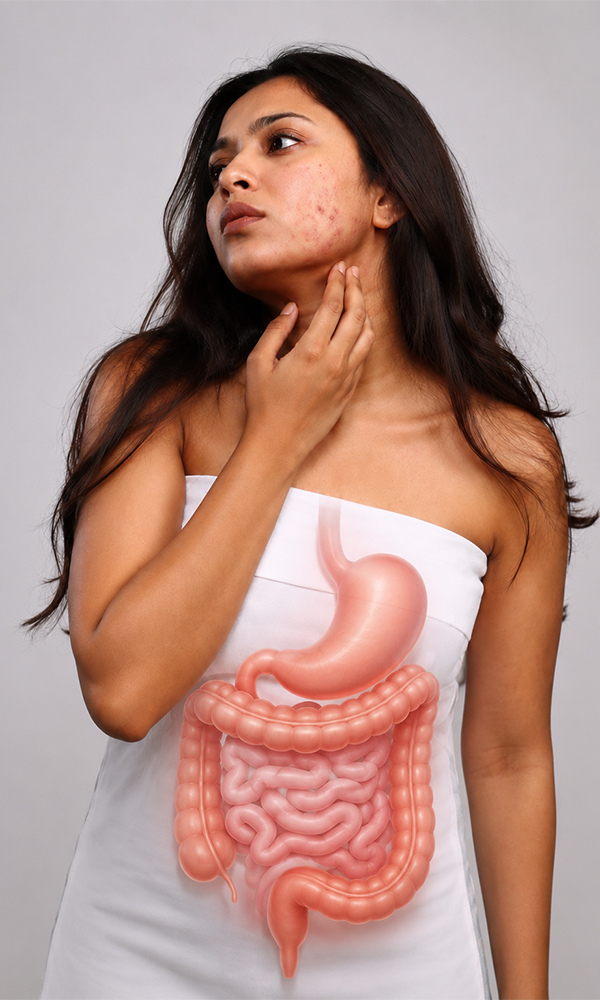
Introduction You've probably noticed a frustrating pattern: clear skin all month, then suddenly your jaw and chin erupt with painful, stubborn breakouts right before your period. Or maybe those deep, cystic bumps along your jawline seem to have taken up permanent residence, regardless of how diligently you follow your skincare routine. If topical treatments haven't worked for you, there's a reason. Hormonal acne on jawline isn't a surface-level problem—it's a signal from your body that something deeper needs attention. The reality is that your skin is an organ, and like every other organ, it responds to what's happening inside your body. Hormonal fluctuations, blood sugar spikes, gut bacteria imbalances, and chronic inflammation all leave their mark on your face. And your jawline? That's essentially ground zero for hormonal activity. This isn't another article telling you to wash your face more or try a new spot treatment. Instead, we're going to break down the actual science behind why acne targets your jaw specifically, what your breakouts are telling you about your internal health, and the evidence-based internal strategies that can help you finally see lasting improvement.
Table of Contents
- 1. Hormonal Acne on Jawline: Understanding Why It Happens and How to Clear It From the Inside Out
- 2. Introduction
- 3. Why Does Acne Target the Jawline Specifically?
- 4. The Androgen Receptor Connection
- 5. The Menstrual Cycle Factor
- 6. The Root Causes Behind Hormonal Jawline Acne
- 7. Blood Sugar and Insulin Resistance
- 8. Gut Health and the Gut-Skin Axis
- 9. Chronic Stress and Cortisol
- 10. Liver Function and Detoxification
- 11. What Your Jawline Acne Type Reveals
- 12. Cystic Acne Along the Jaw
- 13. Cyclical Breakouts (Monthly Pattern)
- 14. Persistent, Non-Cyclical Jawline Acne
- 15. Internal Strategies for Clearing Jawline Acne
- 16. Stabilize Your Blood Sugar
- 17. Support Your Gut Microbiome
- 18. Manage Stress at the Nervous System Level
- 19. Address Inflammation Through Food
- 20. Consider Dairy Elimination
- 21. Timeline: What to Expect
- 22. When to Seek Professional Help
- 23. FAQs
- 24. Conclusion
Key Benefits
- Why Does Acne Target the Jawline Specifically?
- The Androgen Receptor Connection
- Your jawline isn't randomly chosen by acne—there's a biological reason breakouts cluster in this area.
- The skin along your jaw, chin, and lower cheeks contains a significantly higher density of androgen receptors compared to other facial areas. Androgens are hormones like testosterone, DHEA (dehydroepiandrosterone), and DHT (dihydrotestosterone) that exist in both men and women.
- When androgen levels rise—or when your skin becomes more sensitive to normal androgen levels—these receptors get activated. The result? Your sebaceous glands go into overdrive, producing excess sebum (oil). This oil mixes with dead skin cells, clogs your pores, and creates the perfect environment for acne-causing bacteria to thrive.
- This explains why:
- - Teenage boys often get acne during puberty (testosterone surge)
- - Women experience breakouts around their period (hormone fluctuations)
- - Conditions like PCOS (Polycystic Ovary Syndrome) frequently cause persistent jawline acne
- - Stress-related breakouts often appear on the lower face (cortisol affects androgen production)
The Menstrual Cycle Factor
If you menstruate, you've likely noticed your jawline acne follows a predictable rhythm. This isn't coincidence—it's biochemistry.
During the luteal phase (the two weeks before your period), progesterone levels rise. While progesterone itself isn't directly acne-causing, it has a complex relationship with other hormones. As estrogen drops in the days leading up to menstruation, the relative ratio of androgens to estrogen shifts, making androgen effects more pronounced.
Additionally, progesterone can increase skin's oil production and cause slight water retention that makes pores appear smaller while actually trapping sebum inside.
The result: breakouts that seem to appear from nowhere about a week before your period, concentrated along your jaw and chin.
The Root Causes Behind Hormonal Jawline Acne Blood Sugar and Insulin Resistance Here's something most dermatologists don't spend enough time explaining: your blood sugar directly affects your skin. When you eat foods that cause rapid blood sugar spikes—refined carbohydrates, sugary drinks, processed snacks—your pancreas releases insulin to bring glucose levels back down. But insulin doesn't just manage blood sugar. It also: - Stimulates androgen production in the ovaries - Increases the bioavailability of testosterone (by reducing sex hormone-binding globulin) - Triggers insulin-like growth factor 1 (IGF-1), which increases sebum production - Promotes inflammation throughout the body Research published in the Journal of the American Academy of Dermatology has consistently shown connections between high-glycemic diets and acne severity. One study found that participants who followed a low-glycemic diet for 12 weeks showed significant improvement in acne lesion counts compared to a control group. If you're experiencing persistent jawline acne causes that don't respond to topical treatments, unstable blood sugar might be a major contributor.
What Your Jawline Acne Type Reveals Cystic Acne Along the Jaw Deep, painful nodules that never come to a head typically indicate significant hormonal involvement. Cystic acne jawline breakouts suggest: - Higher androgen activity - Possible PCOS or other hormonal conditions - Significant internal inflammation - Blood sugar or insulin issues Cyclical Breakouts (Monthly Pattern) Acne that appears predictably before menstruation and clears afterward points to: - Luteal phase hormone sensitivity - Progesterone-related sebum changes - Potentially treatable through cycle-supportive nutrition Persistent, Non-Cyclical Jawline Acne Constant breakouts without a menstrual pattern may indicate: - Insulin resistance - Chronic stress/cortisol issues - Gut microbiome imbalance - Thyroid dysfunction - Dietary triggers (especially dairy)
Steps
- Internal Strategies for Clearing Jawline Acne
- Stabilize Your Blood Sugar
- Making dietary changes to keep blood sugar steady can significantly improve hormonal acne:
- Focus on protein and fiber first: Start meals with protein, healthy fats, and vegetables before eating carbohydrates. This slows glucose absorption and reduces insulin spikes.
- Choose complex carbohydrates: Sweet potatoes, quinoa, legumes, and whole grains release glucose slowly compared to refined options.
- Don't skip meals: Irregular eating causes blood sugar crashes followed by spikes. Consistent meal timing helps maintain stability.
- Add vinegar to meals: Research shows that consuming apple cider vinegar before carbohydrate-rich meals can reduce post-meal blood sugar spikes by up to 30%.
- Incorporate cinnamon: This common spice has been shown to improve insulin sensitivity. Add it to oatmeal, smoothies, or coffee.
- Support Your Gut Microbiome
- Rebuilding gut health takes time, but the skin benefits are worth the patience:
- Increase fiber intake: Aim for 30+ grams daily from diverse plant sources. Fiber feeds beneficial bacteria and helps eliminate excess hormones.
- Include fermented foods: Kimchi, sauerkraut, kefir, and yogurt introduce beneficial bacteria directly. Start slowly if you're not used to these foods.
- Reduce inflammatory foods: For many people, gluten, dairy, and refined sugar trigger gut inflammation. Consider a 4-week elimination to identify your personal triggers.
- Address digestive issues: Bloating, constipation, or irregular bowel movements indicate gut dysfunction that needs attention. Regular, complete elimination is essential for hormone clearance.
- Manage Stress at the Nervous System Level
- "Just relax" isn't helpful advice. Instead, focus on practices that actually downregulate your nervous system:
- Prioritize sleep: Seven to nine hours allows cortisol to normalize. Sleep deprivation alone can trigger breakouts.
- Practice breathing exercises: Slow, diaphragmatic breathing activates the parasympathetic nervous system. Even five minutes of 4-7-8 breathing (inhale 4 counts, hold 7, exhale 8) can lower cortisol.
- Move your body appropriately: Exercise reduces stress, but intense exercise can spike cortisol. Balance challenging workouts with gentle movement like walking or yoga.
- Set boundaries: Chronic over-commitment keeps stress hormones elevated. Protecting your time and energy is a skin-care practice.
- Address Inflammation Through Food
- An anti-inflammatory diet reduces acne severity:
- Increase omega-3 fatty acids: Fatty fish, walnuts, flaxseed, and chia seeds provide anti-inflammatory omega-3s that counter the inflammatory omega-6s dominant in modern diets.
- Eat colorful plants: The polyphenols in berries, leafy greens, and colorful vegetables have powerful anti-inflammatory effects.
- Use anti-inflammatory spices: Turmeric, ginger, and rosemary contain compounds that reduce systemic inflammation.
- Limit omega-6-heavy oils: Soybean oil, corn oil, and other vegetable oils are highly inflammatory. Cook with olive oil, avocado oil, or coconut oil instead.
- Consider Dairy Elimination
- The dairy-acne connection is well-documented in research. Dairy products:
- - Contain natural hormones from cows (including IGF-1 and androgens)
- - Spike insulin significantly (even low-fat options)
- - May contain residual artificial hormones
- - Trigger inflammation in sensitive individuals
- A 2018 meta-analysis in Nutrients found that any dairy consumption was associated with increased acne risk, with skim milk showing the strongest correlation. Try eliminating dairy completely for 6-8 weeks to assess whether it's a trigger for your hormonal imbalance acne.
Related Resources
- Timeline: What to Expect
- Addressing jawline acne from the inside requires patience. Unlike topical treatments that might show results in days, internal healing follows a different timeline:
- Weeks 1-2: You might experience a "purge" as your body adjusts. Stay consistent.
- Weeks 3-4: Inflammation typically begins decreasing. New breakouts may be less severe.
- Weeks 5-8: You should notice fewer new breakouts and faster healing of existing ones.
- Months 3-6: Significant improvement for most people who address root causes. Hormonal patterns may begin normalizing.
- Ongoing: Maintenance through continued dietary and lifestyle practices. Some people find they can reintroduce certain foods after gut healing; others do better with permanent modifications.
- When to Seek Professional Help
- While internal approaches help many people, certain signs warrant medical evaluation:
- - Severe cystic acne causing scarring
- - Irregular periods alongside jawline acne
- - Excess facial hair, hair loss, or weight changes (possible PCOS)
- - Acne that doesn't respond to dietary changes after 3+ months
- - Symptoms of thyroid dysfunction (fatigue, temperature sensitivity, weight changes)
- A healthcare provider can test hormone levels, blood sugar markers, and thyroid function to identify specific imbalances that need targeted treatment.
No FAQs provided
Conclusion Hormonal acne on the jawline isn't just a skin problem—it's your body communicating that something internal needs attention. The reason your topical products haven't produced lasting results is that they're treating the symptom, not the source. Your jawline breakouts are connected to your blood sugar stability, your gut microbiome health, your stress response, and your body's ability to properly metabolize hormones. When you address these systems, your skin often clears as a natural byproduct. The path to clearer skin from the inside takes longer than a new face wash would promise, but the results are more profound and lasting. You're not just managing acne—you're creating internal conditions where acne doesn't need to exist. Soft CTA Understanding what's driving your breakouts is the first step. If you're ready to learn more about how internal factors affect your skin and explore root-cause approaches, browse our other guides onamiynaturals.com and discover what your body might be trying to tell you.