

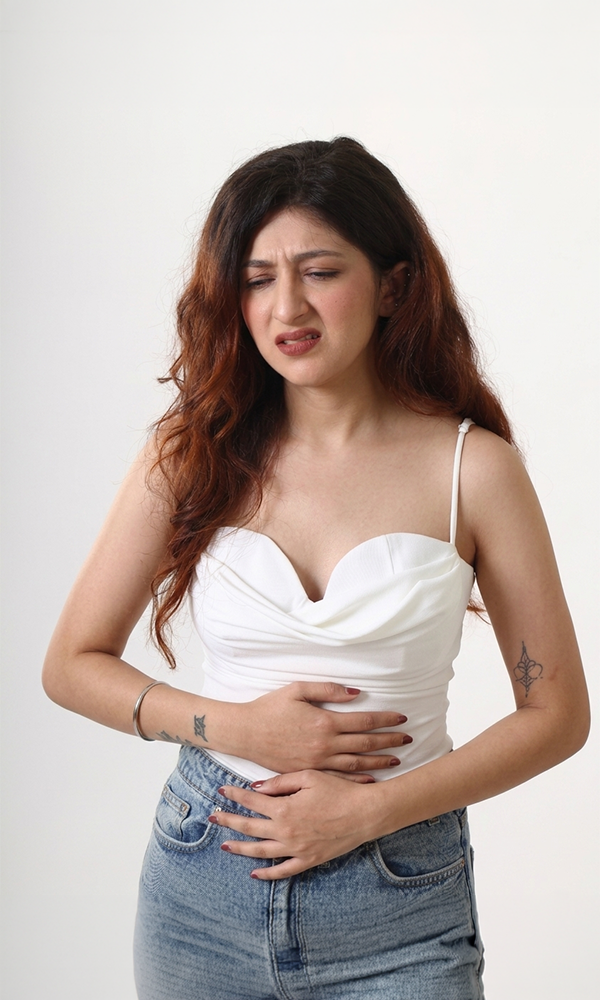


Real Reason Your Period Cramps Are So Painful — And What Science Says About Fixing Them Naturally
Introduction: "It Is Just Cramps" Is Not Okay Enough If you have ever found yourself lying on a bathroom floor because of period pain — missing school, skipping work, or cancelling plans — you know that what you experience is not trivial. And yet, how many times have you heard some version of "it is normal, just take a painkiller"? Here is the truth: some degree of uterine discomfort during menstruation is physiologically normal. Severe, debilitating pain is not. It is a sign that something in your internal hormonal and inflammatory environment needs attention — not just numbing. Understanding why your period cramps are so painful is the first step toward actually changing them. This is not about tolerating pain differently. It is about understanding its root causes and creating conditions in which your body can function the way it is designed to.
Table of Contents
- - Real Reason Your Period Cramps Are So Painful — And What Science Says About Fixing Them Naturally
- - Introduction: “It Is Just Cramps” Is Not Okay Enough
- - The Prostaglandin Problem: Where Period Pain Actually Begins
- - What Are Prostaglandins?
- - What Drives Excess Prostaglandin Production?
- - Oestrogen Dominance: The Hormonal Driver Behind Severe Cramps
- - What Oestrogen Dominance Looks Like
- - Why Your Gut Matters Here — Again
- - The Inflammation-Period Pain Connection
- - Why Chronic Inflammation Makes Cramps Worse
- - Endometriosis: When Inflammation Goes Further
- - Magnesium: The Most Overlooked Mineral in Period Pain
- - The Ayurvedic Lens: Vata, Apana, and Menstrual Harmony
- - Apana Vata and Downward Flow
- - Herbs With Clinical Evidence for Menstrual Pain
- - Practical Daily Habits That Reduce Period Pain Over Time
- - Nutrition Strategies
- - Movement and the Pelvic Floor
- - Sleep and Circadian Rhythm
- - FAQs
- - Conclusion
Key Benefits
- The Prostaglandin Problem: Where Period Pain Actually Begins
- What Are Prostaglandins?
- Prostaglandins are hormone-like fatty acid compounds produced in various tissues throughout the body. During menstruation, prostaglandins — particularly PGF2 alpha and PGE2 — are released by the uterine lining (endometrium) as it breaks down. Their job is to stimulate uterine contractions that help expel the lining.
- In a hormonally balanced body, prostaglandin production is regulated and contractions are manageable. In a body with excess prostaglandin production, those contractions become intense, painful, and can reduce blood flow to the uterus — a process similar to ischaemia, which is the same mechanism that causes heart muscle pain during a heart attack. This is why severe cramps can be genuinely, acutely painful rather than just uncomfortable.
- What Drives Excess Prostaglandin Production?
- This is the crucial question. Excess prostaglandins do not appear randomly — they are produced in response to specific internal conditions:
- - High oestrogen levels relative to progesterone (oestrogen dominance) directly stimulate prostaglandin synthesis in the endometrium
- - Systemic inflammation increases COX-2 enzyme activity, which is the pathway that produces inflammatory prostaglandins
- - A diet high in arachidonic acid (found in processed meats, refined oils, excessive dairy) provides the raw material for pro-inflammatory prostaglandins
- - Magnesium deficiency removes a natural brake on uterine muscle contractions
- - High cortisol from chronic stress amplifies inflammatory signalling pathways
Oestrogen Dominance: The Hormonal Driver Behind Severe Cramps
What Oestrogen Dominance Looks Like
Oestrogen dominance does not necessarily mean absolute high oestrogen. It refers to oestrogen being elevated relative to progesterone — which can happen even with normal oestrogen levels if progesterone is low. Symptoms beyond painful periods include: heavy menstrual flow, PMS mood swings, breast tenderness, bloating, and in more severe cases, endometriosis or fibroids.
Why Your Gut Matters Here — Again
As we explored in the context of hormonal acne, the gut's estrobolome plays a central role in how oestrogen is cleared from the body. When gut bacteria are disrupted and beta-glucuronidase activity is elevated, unconjugated oestrogen re-enters circulation rather than being excreted. This directly contributes to the oestrogen excess that amplifies prostaglandin production and period pain.
This is why gut health is not a side topic in menstrual health — it is central to it. Women with IBS frequently report worse PMS and menstrual pain, and this is not coincidental. The gut-uterus connection is real, bidirectional, and biologically meaningful.
The Inflammation-Period Pain Connection Why Chronic Inflammation Makes Cramps Worse Systemic inflammation — measured through markers like CRP (C-reactive protein), IL-6, and TNF-alpha — amplifies the pain signalling cascade during menstruation. When the immune system is already in a low-grade inflammatory state (driven by poor diet, gut permeability, chronic stress, or sleep disruption), the prostaglandin surge during menstruation is far more intense. Think of it like a volume dial. Low baseline inflammation means the body can process the prostaglandin signal with moderate discomfort. High baseline inflammation turns that signal into 10 out of 10 pain. Endometriosis: When Inflammation Goes Further In endometriosis — a condition affecting roughly 10% of women of reproductive age — endometrial-like tissue grows outside the uterus. This tissue also responds to hormonal cycles and produces prostaglandins during menstruation, but without the usual outlet. The resulting inflammation is trapped internally, causing severe pain, often throughout the cycle rather than just during menstruation. Research increasingly points to gut dysbiosis, immune dysregulation, and elevated inflammatory load as contributing factors in endometriosis development and severity — underscoring again that this is a systemic, internal condition rather than purely a gynaecological one.
The Ayurvedic Lens: Vata, Apana, and Menstrual Harmony Apana Vata and Downward Flow In Ayurvedic physiology, menstruation is governed by Apana Vata — the downward-moving energy responsible for elimination and release. When Apana Vata is obstructed or aggravated (often by cold foods, irregular eating, stress, or constipation), the normal downward flow of menstrual blood is impaired, leading to pain, irregularity, and clotting. Ayurvedic approaches to menstrual pain therefore focus on: clearing obstruction, warming the pelvic region, supporting digestive regularity, and calming the nervous system — all of which have correlates in modern physiological understanding (reducing pelvic muscle tension, improving blood flow, reducing prostaglandin-mediated spasm, and modulating the stress response).
Steps
- Herbs With Clinical Evidence for Menstrual Pain
- Several botanicals traditionally used for menstrual discomfort have now been evaluated in clinical research:
- - Ginger (Zingiber officinale): Shown in multiple RCTs to reduce menstrual pain as effectively as ibuprofen in some trials, through COX and LOX pathway inhibition
- - Fennel (Foeniculum vulgare): Reduces prostaglandin synthesis and uterine muscle spasm
- - Shatavari (Asparagus racemosus): Supports oestrogen-progesterone balance and has uterine tonic properties
- - Ashoka (Saraca asoca): Traditional uterine tonic with anti-spasmodic and anti-inflammatory actions
- - Cramp bark (Viburnum opulus): Acts as a uterine smooth muscle relaxant
- These are not home remedies in the dismissive sense. They are pharmacologically active botanicals whose mechanisms of action are increasingly understood — and they offer targeted support without the prostaglandin-suppressing side effects of NSAIDs used long-term.
Related Resources
- Practical Daily Habits That Reduce Period Pain Over Time
- Nutrition Strategies
- Shifting away from a pro-inflammatory dietary pattern has measurable effects on menstrual pain. Practically this means: reducing refined sugar and processed carbohydrates (which drive insulin and inflammatory cascades), reducing arachidonic acid-rich foods (fried foods, processed meats, excess refined vegetable oils), and increasing anti-inflammatory omega-3 fatty acids (oily fish, flaxseed, chia, walnuts).
- Iron-rich foods are also important since heavy periods commonly lead to iron insufficiency, which itself worsens fatigue and pain tolerance.
- Movement and the Pelvic Floor
- Gentle movement — particularly yoga, walking, and swimming — during the follicular phase (post-period, pre-ovulation) consistently reduces menstrual pain in the following cycle. This is thought to work through improved pelvic blood flow, reduced prostaglandin sensitivity, and beneficial effects on cortisol regulation.
- During menstruation itself, gentle yoga poses (child's pose, reclined butterfly) that reduce pelvic tension and improve blood flow are better choices than high-intensity training.
- Sleep and Circadian Rhythm
- Poor sleep quality amplifies pain sensitivity — a well-documented phenomenon. It also elevates cortisol and reduces magnesium levels. Prioritising sleep quality in the week before your period is not luxury — it is part of managing menstrual pain biology.
Frequently Asked Questions
Conclusion Period pain that derails your life every month is not a rite of womanhood to be endured. It is a physiological signal — and a solvable one, when you understand what is driving it. Excess prostaglandins, oestrogen dominance, gut dysbiosis, magnesium deficiency, and systemic inflammation are the key levers. Address them with consistency, and the pain that once felt inevitable becomes manageable — and often, significantly reduced. The body is not trying to punish you during your period. When properly supported — through nutrition, microbiome health, botanical medicine, and nervous system regulation — it can go through its monthly cycle with far less drama. You deserve that version of your health.