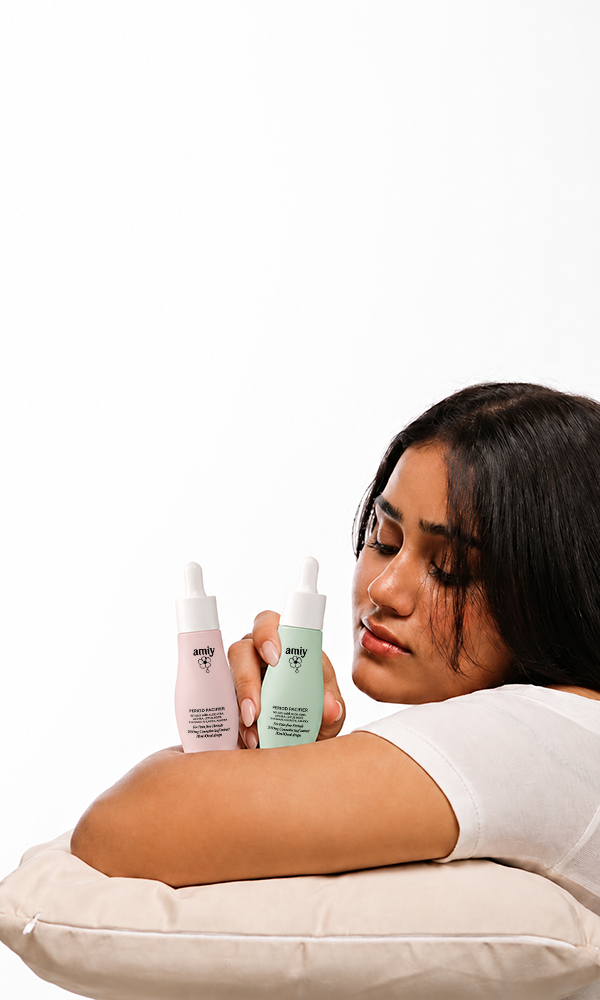





PMS Mood Swings Causes: Why Your Emotions Before Your Period Are Biologically Real
If you've ever been dismissed for experiencing severe mood changes before your period — told you're "just hormonal" or "being too sensitive" — this blog is a direct clinical response to that dismissal. PMS mood swings are not a character flaw, a lack of emotional resilience, or a psychological vulnerability. They have precise, well-documented neurobiological causes — involving progesterone metabolism, GABA receptor function, serotonin synthesis, cortisol, gut microbiome, and the interplay between them. Understanding the PMS mood swings causes is the first step to treating them as what they are: a physiological event with physiological solutions.
Table of Contents
- 1. PMS Mood Swings Causes: Why Your Emotions Before Your Period Are Biologically Real
- 2. The Luteal Phase — When Hormones Shift and the Brain Feels It
- 3. Progesterone and GABA — The Calming Connection That Breaks Down
- 4. Oestrogen and Serotonin — The Mood Stabiliser Connection
- 5. Why SSRIs Are Used for PMDD — And What That Tells Us
- 6. Cortisol — The HPA Axis and Its Interaction with the Menstrual Cycle
- 7. The Gut and PMS Mood — Serotonin Made in the Intestine
- 8. PMS vs PMDD — Understanding the Spectrum
- 9. Frequently Asked Questions
- 10. Conclusion
Key Benefits
- The Luteal Phase — When Hormones Shift and the Brain Feels It
- The luteal phase is the second half of the menstrual cycle — days 15 to 28 (approximately) — following ovulation. During this phase, the corpus luteum (the structure formed from the ruptured follicle) produces large amounts of progesterone and oestrogen to prepare the uterus for a potential pregnancy.
- If pregnancy does not occur, the corpus luteum degenerates, and both progesterone and oestrogen drop sharply in the late luteal phase (days 24–28). This hormonal withdrawal is the central trigger of both physical and mood-related PMS symptoms.
- The brain is profoundly sensitive to these hormonal fluctuations — not just because it has receptors for sex hormones, but because progesterone and oestrogen directly modulate the neurotransmitter systems that regulate mood, anxiety, sleep, and emotional reactivity.
Progesterone and GABA — The Calming Connection That Breaks Down
This is the most clinically important mechanism behind PMS mood swings causes and one that is still underappreciated in standard medical education.
Progesterone is metabolised in the brain into a neuroactive steroid called allopregnanolone (ALLO). Allopregnanolone is a powerful positive allosteric modulator of GABA-A receptors — meaning it significantly enhances the activity of GABA, the brain's primary inhibitory neurotransmitter.
GABA's role is essentially to reduce neural excitability — producing the sensations of calm, ease, reduced anxiety, and restful sleep. In the mid-luteal phase, when progesterone is high, allopregnanolone levels are elevated, and GABA function is robustly supported. Many women report feeling exceptionally good in this phase.
In the late luteal phase, as progesterone drops, allopregnanolone levels fall sharply. The GABA system loses this support. The result is:
• Increased neural excitability and anxiety
• Heightened emotional reactivity
• Disrupted sleep (GABA is critical for sleep architecture)
• Heightened pain sensitivity
• Irritability and low frustration tolerance
This GABA withdrawal — rather than low progesterone itself — is now understood as the primary neurological driver of mood-related PMS symptoms. Interestingly, some women with PMDD (premenstrual dysphoric disorder) appear to have a paradoxical sensitivity to allopregnanolone, where its presence actually worsens anxiety — a phenomenon that is the focus of active clinical research.
Oestrogen and Serotonin — The Mood Stabiliser Connection Oestrogen has a powerful regulatory relationship with the serotonin system — the neurotransmitter most associated with mood stability, emotional resilience, and sense of wellbeing. Oestrogen:• Increases the transcription of tryptophan hydroxylase, the rate-limiting enzyme in serotonin synthesis• Upregulates serotonin receptors (5-HT2A)• Reduces the reuptake of serotonin (a mechanism similar to SSRIs)• Increases the availability of tryptophan (serotonin's amino acid precursor) by reducing its sequestration in the liver In the mid-follicular phase, when oestrogen is rising, serotonin activity is at its highest — explaining why many women feel most emotionally resilient, socially engaged, and positive in the first half of their cycle. In the late luteal phase, when oestrogen falls, serotonin synthesis and receptor sensitivity fall with it. Combined with the simultaneous withdrawal of allopregnanolone from GABA receptors, this dual neurochemical drop creates the emotional vulnerability, tearfulness, and anxiety characteristic of PMS mood swings.
Why SSRIs Are Used for PMDD — And What That Tells Us SSRIs (selective serotonin reuptake inhibitors) are prescribed for PMDD (premenstrual dysphoric disorder — the severe form of PMS) either continuously or only during the luteal phase. Their effectiveness in PMDD directly supports the serotonin-deficiency model of severe premenstrual mood symptoms. The fact that SSRIs reduce PMDD symptoms within days (rather than the weeks required for depression treatment) suggests the mechanism is specific to hormonal modulation of serotonin activity rather than the deeper neuroplastic effects that take weeks to develop.
Steps
- Cortisol — The HPA Axis and Its Interaction with the Menstrual Cycle
- The HPA axis and menstrual cycle interact in ways that significantly amplify PMS mood swings caused in chronically stressed women.
- Cortisol and progesterone compete for the same glucocorticoid receptors. This means chronically elevated cortisol effectively blocks progesterone's receptor-level effects — including its conversion to allopregnanolone and its support of GABA function. In chronically stressed women:• The allopregnanolone-GABA calming effect in the mid-luteal phase is blunted• The mood-stabilising benefit of progesterone's peak is reduced• The emotional crash in the late luteal phase is deeper and more abrupt• PMS symptoms — particularly anxiety and irritability — are significantly more severe
- This cortisol-progesterone competition explains why women consistently report that their PMS is significantly worse during periods of high life stress — and better when stress is well-managed.
- → Explore Tranquil Tonic for stress and hormonal nervous system regulation: https://amiynaturals.com/products/tranquil-tonic
- The Gut and PMS Mood — Serotonin Made in the Intestine
- This is a fact that surprises almost everyone: over 90% of the body's serotonin is produced in the gut — specifically by enterochromaffin cells lining the intestinal wall, which synthesise serotonin from dietary tryptophan in response to microbial signals.
- This means the gut microbiome directly regulates the body's serotonin production capacity. Gut dysbiosis — reduced microbiome diversity, impaired tryptophan metabolism, and reduced production of serotonin precursors — therefore has direct consequences for the serotonin availability in both the gut and the brain.
- Gut dysbiosis and PMS mood:• Reduced serotonin synthesis capacity lowers the baseline from which the late-luteal drop occurs — making the mood impact of the drop more severe• Gut dysbiosis impairs estrobolome function, promoting oestrogen dominance which paradoxically worsens the oestrogen withdrawal effect• Gut-derived LPS triggers neuroinflammation, which impairs mood regulation independently• Increased intestinal permeability allows bacterial fragments to cross the blood-brain barrier (via a compromised gut-brain axis), directly affecting neurological function.
Related Resources
- PMS vs PMDD — Understanding the Spectrum
- Premenstrual syndrome (PMS) affects an estimated 30–40% of women of reproductive age and involves physical and mood symptoms in the luteal phase that are bothersome but manageable.
- Premenstrual dysphoric disorder (PMDD) is classified as a DSM-5 depressive disorder and affects 3–8% of women. It is characterised by:• Severe depression, hopelessness, or suicidal ideation in the late luteal phase• Marked anxiety or tension• Marked emotional lability (mood swings within hours)• Persistent anger or irritability causing relationship conflict• Significantly impaired daily function for 7–10 days per cycle
- PMDD is not simply "worse PMS" — it represents a distinct neurobiological sensitivity, potentially involving abnormal GABA-A receptor sensitivity to allopregnanolone fluctuation, that requires medical evaluation and often clinical management.
- If your mood symptoms before your period consistently prevent normal function, cause significant relationship disruption, or include depressive or suicidal thoughts — these symptoms warrant clinical assessment, not self-management.
Frequently Asked Questions
PMS mood swings are driven by real biological and neurochemical changes involving progesterone, allopregnanolone, serotonin, cortisol, and gut-brain interactions. These fluctuations affect brain signalling systems responsible for emotional regulation, which explains the timing and intensity of symptoms in the luteal phase. Understanding PMS as a physiological process rather than a purely emotional reaction allows for more effective, targeted approaches to management and support. Soft CTA If premenstrual mood symptoms are affecting your wellbeing, you may wish to explore supportive approaches that target hormonal balance, stress response, and nervous system regulation: - Amiy Naturals Period Pacifier - Amiy Naturals Tranquil Tonic These are intended as supportive wellness options and should be considered alongside guidance from a qualified healthcare professional.